
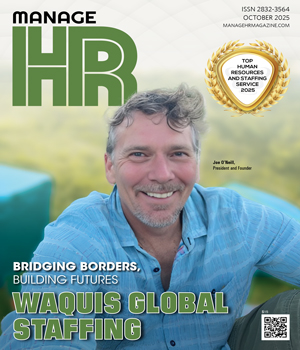
Waquis Global Staffing: Bridging Borders, Building Futures

Top Leadership Coaching 2025

Human resources is shedding its traditional back-office image and stepping into a transformative role—shaping not only how people experience work, but also how organizations succeed and evolve.

In this edition of Manage HR, we delve into the forces reshaping modern workplaces, examining how evolving expectations, emerging technologies and innovative people strategies are redefining the future of work.

Today’s organizations are realizing that employee experience is no longer a peripheral concern—it shapes performance, innovation and retention at every level. Corporate workshops, for example, are no longer one-size-fits-all seminars; they are immersive, adaptive programs that combine leadership development, emotional intelligence training and scenario-based problem solving, enabling teams to effectively respond to complex challenges. These programs are helping employees build skills that matter in real-time, preparing them to navigate the unexpected demands of modern work.

Equally significant is the way companies are rethinking support systems for their workforce. Benefits like backup care are evolving from simple perks into integrated solutions that address the unpredictable realities of modern life, acknowledging that employees perform best when personal and professional responsibilities can coexist with minimal friction.

Talent acquisition and development are becoming more strategic and insight-driven. Executive recruiting and staffing services are increasingly focused on understanding an organization’s culture and long-term goals, using data and behavioral insights to connect companies with leaders who can drive both performance and innovation. Leadership coaching, meanwhile, is moving beyond standard skill-building to tailored programs that help executives navigate complexity, foster collaboration and inspire high-performing teams, ensuring that leadership pipelines remain strong and capable.

Together, these shifts reflect an HR landscape that is less transactional and more transformative. By embedding human-centered strategies into every aspect of the employee journey, organizations are fostering environments where talent can thrive, leadership can evolve and the workforce can adapt to an ever-changing world.

We hope this edition of Manage HR helps you find the right partner for your business requirements.


    Top Leadership Coaching

    Sylvester provides leadership, communication, and sales development coaching for executives, managers, and teams to improve sales performance and workplace culture. Certified in Five Behaviors, Maxwell Leadership, and DiSC, Paul helps organizations grow strong leaders, build cohesive teams, and transform communication with honest feedback and long-term guidance. ... read full profile

Leadership Development Info

Q1
What Do Top Leadership Development Companies Help Organizations Achieve?
Top Leadership Development Companies help organizations strengthen management capability, improve decision-making and prepare future leaders for business growth and workforce change. These companies typically provide executive coaching, leadership training, communication development, succession planning and culture-building programs tailored to different leadership levels. In the U.S. market, enterprises are increasingly using leadership development providers to improve employee engagement, reduce leadership gaps and support hybrid workforce management. Many programs now combine coaching, behavioral assessments, workshops and digital learning platforms to create measurable leadership improvement across teams and departments.
Q2
Why Are Leadership Development Services Receiving Greater Attention?
Leadership development has become a larger priority as organizations manage workforce transitions, remote collaboration and changing employee expectations. Many companies now recognize that technical expertise alone does not create effective leaders. The demand for Top Leadership Development Companies has also increased because organizations want managers who can guide teams through uncertainty, communication challenges and organizational change. The broader leadership development market continues to expand as businesses invest more heavily in talent retention, internal mobility and people-first management practices. Publications such as Manage HR Magazine regularly highlight how leadership capability is becoming closely tied to long-term business resilience.
Q3
How Should Enterprises Evaluate Leadership Development Companies?
Organizations evaluating leadership development companies should look beyond motivational training or generic workshops. The strongest providers usually align leadership programs with business goals, workforce structure and company culture. Enterprises often assess factors such as coaching methodology, customization capability, leadership assessment tools, industry expertise and long-term engagement models. Top Leadership Development Companies are also increasingly expected to provide measurable outcomes through leadership analytics, employee feedback and progress tracking. Buyers often prefer providers that can support multiple leadership levels, from frontline managers to executive leadership teams, while adapting programs for hybrid and geographically distributed workforces.
Q4
What Business Value Do Leadership Development Providers Deliver?
Leadership development programs can influence productivity, employee retention, collaboration and organizational culture. Companies investing in leadership training often aim to improve manager effectiveness, reduce communication breakdowns and create stronger succession pipelines. Top Leadership Development Companies frequently help organizations build consistency in leadership behavior across departments and regions. In many industries, leadership quality also affects customer experience, innovation and workforce morale. Effective development programs can support faster decision-making, stronger accountability and improved cross-functional coordination, particularly in organizations experiencing growth, restructuring or digital transformation initiatives.
Q5
How Are Technology and Innovation Influencing Leadership Development?
Leadership development providers are increasingly blending human coaching with digital learning tools, behavioral analytics and virtual collaboration platforms. Many organizations now expect flexible learning experiences that combine instructor-led sessions, self-paced modules and real-time coaching support. Some Top Leadership Development Companies use leadership assessments, learning analytics and AI-supported feedback systems to personalize development journeys and identify skill gaps more effectively. Virtual leadership simulations, communication coaching and scenario-based learning are also becoming more common as enterprises look for scalable ways to train managers across multiple locations without sacrificing engagement or practical relevance.
Q6
What Should Decision-Makers Prioritize When Comparing Leadership Development Companies?
Decision-makers comparing Top Leadership Development Companies should prioritize relevance, adaptability and measurable impact rather than broad training catalogs alone. Leadership programs tend to deliver stronger results when providers understand the organization’s industry pressures, workforce dynamics and management challenges. Enterprises often benefit from providers that balance leadership theory with practical implementation, coaching support and measurable progress indicators. Cultural alignment, facilitator expertise and long-term partnership capability also matter when selecting leadership development providers. Many organizations prefer companies that can evolve programs over time as leadership expectations, workforce structures and business priorities continue to change.
Take Me Top